
Guarding the Marine Treasures of the Pacific
The Gulf of Chiriquí, stretching along Panama’s southwestern Pacific coast, is an marine canvas of intense biological activity. It is a world defined by dramatic underwater topography, nutrient-dense oceanic currents, and a labyrinth of pristine volcanic islands. For decades, this region has called out to global anglers as a premier frontier for big-game sport fishing. Legendary locations such as the Hannibal Bank, Isla Montuosa, and Coiba Island offer unparalleled encounters with apex predators like Black Marlin, Sailfish, massive Yellowfin Tuna, and the prized Roosterfish.
However, the preservation of this world-class fishery is not an accident of geography; it is the direct result of a fundamental shift toward sustainable angling. At the heart of this conservation ethos is the practice of catch and release. Championed by leading local operators like Panama Sport Fishing Charters, this management framework balances the thrill of the sport with an unwavering commitment to ecological preservation.
1. The Origins of Catch and Release
While catch and release is viewed today as a modern cornerstone of marine conservation, its roots stem from both necessity and evolving ethical standards in global angling.
The Fresh Water Genesis
The conceptual framework of catch and release first took form in the early-to-mid 20th century within freshwater trout and salmon fisheries. Legendary conservationists like Lee Wulff popularized the philosophy, famously writing in 1939:
“A game fish is too valuable to be caught only once.”
Anglers began to notice that closed seasons and traditional bag limits were insufficient against rising numbers of fishermen. By returning healthy fish to the water, a single stream could provide sport indefinitely.
Transition to the Oceans
By the late 20th century, the international big-game fishing community recognized that marine resources were equally vulnerable. The migration of this philosophy to the saltwater arena was heavily accelerated by organization-led initiatives, notably from groups like the International Game Fish Association (IGFA) and The Billfish Foundation.
Historically, billfishing was defined by the “kill dock” culture, where massive marlin and sailfish were brought back to shore purely for weighing and trophy photographs, often going to waste. As scientific data revealed steep declines in global billfish populations due to commercial longlining and unregulated sport fishing, a paradigm shift occurred.
The Panamanian Mandate
Panama recognized this threat early. The country instituted progressive maritime regulations that legally banned commercial longlining and industrial purse-seine vessels within specific marine sanctuaries, establishing strict “catch and release only” mandates for all billfish. Today, professional outfits operating throughout the Gulf of Chiriquí have elevated this regulatory baseline into a comprehensive angling culture.
2. Focus: Species-Specific Protocols and Best Practices
The practice of catch and release in the Gulf of Chiriquí is highly scientific and meticulously organized. It is not merely a matter of tossing a hooked fish back into the ocean; rather, it is a structured operational focus targeting distinct ecological tiers.
                  ┌─────────────────────────────────────────┐
                  │   GULF OF CHIRIQUÍ FISHERY MANAGEMENT   │
                  └────────────────────┬────────────────────┘
                                       │
            ┌──────────────────────────┴──────────────────────────┐
            ▼                                                     ▼
┌───────────────────────┐                             ┌───────────────────────┐
│     CATCH & RELEASE   │                             │   SUSTAINABLE HARVEST │
│  (100% Conservation)  │                             │   (Gourmet Table Fare)│
└───────────┬───────────┘                             └───────────┬───────────┘
            │                                                     │
            ├─► Billfish (Black/Blue Marlin, Sailfish)            ├─► Yellowfin Tuna
            ├─► Inshore Icons (Roosterfish)                        ├─► Dorado (Mahi-Mahi)
            └─► Apex Reef Predators (Cubera Snapper)              └─► Wahoo
Billfish Protection
The primary focus of offshore conservation covers apex pelagic billfish, specifically Black Marlin (Istiompax indica), Blue Marlin (Makaira nigricans), and Pacific Sailfish (Istiophorus platypterus). These long-lived, slow-growing apex predators are critical to maintaining the balance of the open-ocean food web. In the Gulf of Chiriquí, keeping these species is prohibited by law, and they must be released unharmed at the boat.
Inshore and Reef Guardians
Closer to the rugged coastlines and island outcroppings, the focus shifts to resident giants. The Roosterfish (Nematistius pectoralis)—distinguished by its iconic comb-like dorsal fin—and the prehistoric Cubera Snapper (Lutjanus cyanopterus) are the twin targets of inshore anglers.
While not always protected by absolute statutory bans like billfish, elite charter operations enforce a strict, voluntary catch-and-release policy for these species. Keeping a 50-pound Cubera Snapper, which may have taken decades to reach that size, robs the reef of a primary genetic contributor.
The “Gulf-to-Table” Balance
A well-rounded sport fishing ecosystem distinguishes between vulnerable trophy species and highly prolific, fast-growing food fish. Species such as Yellowfin Tuna, Dorado (Mahi-Mahi), and Wahoo are managed under sustainable harvest principles. Anglers are encouraged to keep reasonable limits of these species for dinner, which local chefs prepare fresh, while returning the apex billfish and inshore residents back to the ecosystem.
3. The Science and Reasons Behind Catch and Release
The insistence on catch and release is anchored in biological data and socioeconomic realities. When executed correctly, the practice yields far-reaching ecological benefits.
Maintaining Genetic Integrity and Fecundity
The largest fish in any population—often the prime targets for sport anglers—are known as BOFFF’s (Big Old Fat Fertile Female Fish). In marine biology, fecundity (the ability to produce offspring) increases exponentially with a fish’s size and age.
- For example, a single mature, trophy-sized Cubera Snapper produces millions more eggs per spawning cycle than several smaller snappers combined.
- Releasing these giant individuals ensures that the strongest, most resilient genetic traits remain within the local breeding pool.
Preserving Ecosystem Equilibrium
Apex predators like marlin and sailfish keep pelagic prey populations healthy and regulated. Removing these top-tier predators triggers a negative ecological cascade, allowing smaller predatory fish to overpopulate, which can rapidly deplete baitfish stocks and destabilize the regional food web.
Economic Sustainability and Eco-Tourism
From a socioeconomic standpoint, a released fish represents continuous economic value. A single trophy marlin can be caught, photographed, and safely released multiple times over its lifespan. Each encounter generates revenue for local boat captains, mates, hospitality workers, and fuel providers. Conversely, a dead fish brought to the dock provides a single meal and ends that economic chain permanently.
4. Spotlight: The Gulf of Chiriquí and Panama Sport Fishing Charters
The Gulf of Chiriquí represents a unique marine habitat. Warmed by equatorial currents and disrupted by dramatic underwater structures like the Hannibal Bank—a massive seamount that forces nutrient-rich deep water upward (upwelling)—the region acts as a massive feeding ground for baitfish and the predators that hunt them.
Because of this intense concentration of marine life, the pressure from global anglers is high. This is where the practices of specialized operators become essential.
Advanced Handling Techniques
Panama Sport Fishing Charters implements rigorous, scientifically validated catch-and-release protocols to minimize post-release mortality. The survival rate of a released fish depends heavily on how it is handled during the fight and the subsequent release process.
- Mandatory Circle Hooks: When using live or dead natural bait, the charter uses non-offset circle hooks. Unlike traditional J-hooks, which can be deeply swallowed and cause fatal internal injuries, circle hooks are designed to slide out of the fish’s throat and hook safely in the corner of the jaw, ensuring a clean removal.
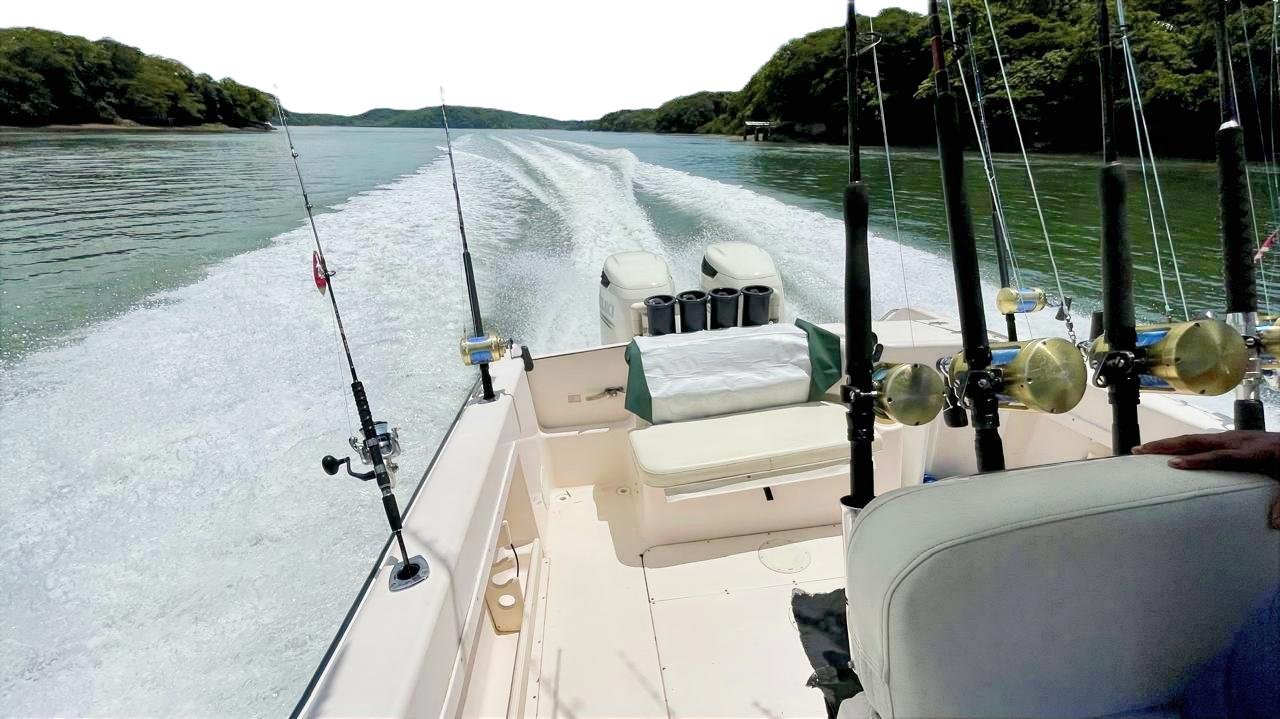
- Heavy Tackle Implementation: Using matching tackle prevents prolonged fights that can exhaust a fish to the point of lethal lactic acid buildup. Bringing a fish to the boat efficiently ensures it retains the strength required to survive post-release shark encounters.
- In-Water Resuscitation: For large pelagic species, crews avoid pulling the fish out of the water onto the deck. Removing a heavy fish from the water strains its internal organs and damages its protective slime coating. Instead, the crew keeps the boat moving slowly forward, holding the fish alongside the hull to force oxygen-rich water through its gills until it revives and swims away under its own power.
5. The Future of Sustainable Angling
The continued health of the Gulf of Chiriquí stands as an encouraging example for marine conservation. By transforming sport fishing from an extractive industry into a sustainable, low-impact pursuit, the angling community protects these waters for future generations.
As tracking technologies, satellite tagging, and marine biology continue to advance, the data collected from catch-and-release practices will refine these protocols further. Through the partnership of conservation-minded regulations and dedicated operations like Panama Sport Fishing Charters, the magnificent species of the Gulf of Chiriquí will continue to thrive, keeping Panama a vibrant sanctuary for big-game angling.
